Divorce & Family Law · Pokhara, Kaski
Divorce & Family Lawyer in Pokhara
Gitanjali Law Firm handles divorce, child custody, alimony, partition and domestic violence cases at Kaski District Court in Pokhara. Advocate Gita Acharya is a woman advocate with over 20 years of family-law practice, and represents clients living abroad through power of attorney.
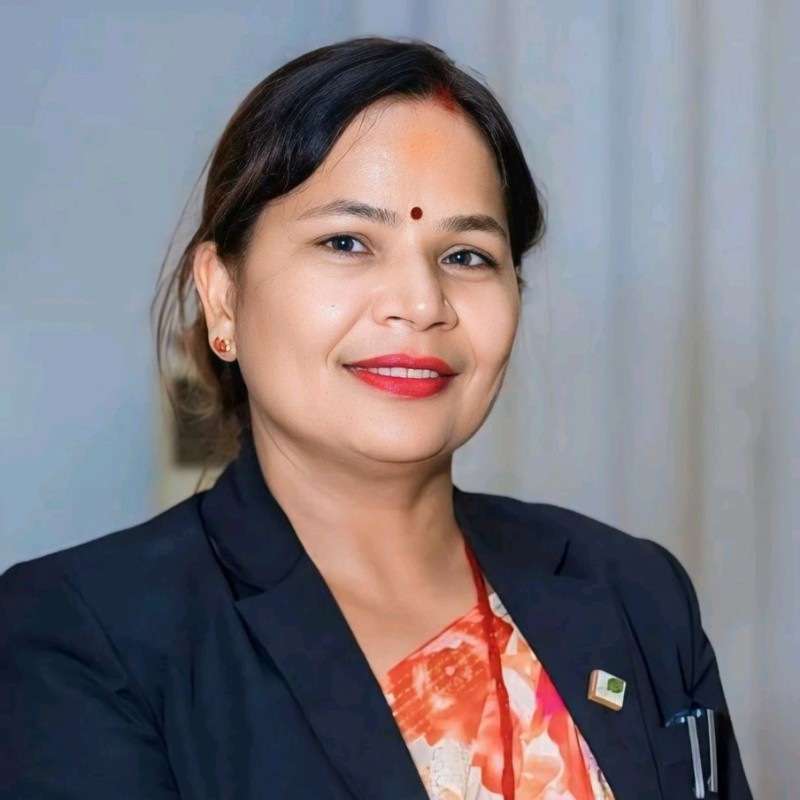
Advocate Gita Acharya
Nepal Bar Council Reg. 9058
Consultations and case strategy handled personally. More than 20 years of practice before courts and public offices in Pokhara.
Understanding your position
If you are looking for a divorce lawyer in Pokhara, the case will be filed and heard at Kaski District Court, a short drive from our office at Mustang Chowk. Gitanjali Law Firm has handled family matters in Pokhara for over two decades — mutual-consent divorce, contested divorce, child custody, alimony, restitution of marital property, and protection orders in domestic violence cases.
Family cases are not only legal problems. They involve children, housing, income and family reputation, and most clients arrive already exhausted. Advocate Gita Acharya is a woman advocate, and many clients — particularly women filing for divorce, maintenance or protection from domestic violence in Pokhara — prefer to describe what happened to a female lawyer first. Consultations are private, in Nepali or English, and nothing is filed until you understand the consequences.
Divorce in Nepal is governed by the Muluki Civil Code, 2074 (2017), which sets out both mutual-consent divorce and the grounds on which either spouse may seek divorce. A mutual petition where both spouses agree on property and children moves very differently from a contested case involving hidden property, a spouse abroad, or allegations of cruelty — the first step is always to work out which of the two you actually have.
Matter at a glance
| Court that hears Pokhara divorce cases | Kaski District Court |
|---|---|
| Appeal court | High Court Pokhara |
| Governing law | Muluki Civil Code, 2074 (2017) |
| Client abroad? | Case can run on attested power of attorney |
| Consultation languages | Nepali, English, Hindi |
Court fees in family matters are fixed by statute. What actually varies between cases is the number of hearings, whether property has to be traced and valued, and whether the matter is contested or proceeds by mutual consent.
Scope of representation
What divorce & family lawyer covers
Mutual-consent divorce
Joint petition to Kaski District Court with a written settlement covering partition of property, maintenance and custody of children, drafted so the terms are enforceable later rather than merely agreed on paper.
Contested divorce
Filing or defending a divorce case on the grounds recognised by the Muluki Civil Code, 2074 — including living separately, failure to provide maintenance, cruelty, or a spouse's conduct that makes cohabitation impossible — with evidence, witnesses and cross-examination.
Child custody and visitation
Custody claims argued on the welfare of the child, plus practical arrangements for schooling in Pokhara, travel, and access for a parent working abroad.
Maintenance and alimony
Claims for maintenance (खर्च) for a spouse and children, including enforcement where an order is ignored, and defence where the demanded amount does not match real income.
Marital property and partition claims
Identifying which land, house, vehicle, business share or bank balance is joint property, tracing property transferred to relatives to defeat a claim, and filing partition (अंश) alongside divorce where required.
Domestic violence and protection
Complaints under the Domestic Violence (Offence and Punishment) Act, applications for interim protection, and coordination with the police Women and Children Service Centre in Pokhara.
Divorce for Nepalis living abroad
Representation through an authorised power of attorney (अधिकृत वारेसनामा) attested at a Nepali embassy or consulate, so a client in Gulf countries, Korea, Japan, Australia, the UK or the USA does not have to remain in Pokhara for the full case.
Marriage registration and relationship documents
Registration of marriage at the ward office, correction of records, and affidavits needed for visa, immigration or foreign-court purposes.
Our approach
How these matters are handled
- 01Family matters from Pokhara are filed at Kaski District Court, with appeals lying to High Court Pokhara.
- 02The first consultation establishes whether the matter can proceed by mutual consent or must be contested — the two routes differ substantially in evidence and duration.
- 03Property, maintenance and custody are dealt with alongside the divorce rather than left over as a separate case.
- 04Where a spouse lives abroad, the matter can proceed under an authorised power of attorney attested at a Nepali mission.
- 05Consultations are confidential and are taken by Advocate Gita Acharya personally.
Where these matters are decided
- · Kaski District Court, Pokhara
- · High Court Pokhara
- · Women and Children Service Centre, Nepal Police, Kaski
- · Ward offices of Pokhara Metropolitan City (marriage registration)
Governing law
- · Muluki Civil Code, 2074 (2017) — marriage, divorce, custody, partition
- · National Civil Procedure Code, 2074 (2017)
- · Domestic Violence (Offence and Punishment) Act, 2066
- · Act Relating to Children, 2075
From consultation to resolution
How the process works
Every matter is different, but the work follows a clear sequence. You should always know what has happened and what comes next.
- 01
1. Private consultation
Bring citizenship certificates, marriage registration (if any), land ownership certificates (लालपुर्जा), bank details and anything in writing — messages, letters, medical or police records. Call or WhatsApp +977 9856032228 to fix a time at Mustang Chowk.
- 02
2. Case assessment
We identify whether the matter can proceed by mutual consent, what property and custody claims exist, which documents are missing, and what the other side is likely to argue.
- 03
3. Drafting and filing
Petition, settlement deed or written reply drafted and filed at Kaski District Court, with court fees and registration handled by the firm.
- 04
4. Hearings, mediation and evidence
Many family cases pass through court-referred mediation before trial. Where mediation fails, we present documents and witnesses and cross-examine the other side.
- 05
5. Judgement and enforcement
Once judgement is issued we handle certified copies, execution of maintenance or partition orders, and appeal to High Court Pokhara where the outcome warrants it.
Discuss a divorce & family law matter
Bring your documents to the office at Mustang Chowk, or send them on WhatsApp if you are outside Pokhara or abroad.
Mustang Chowk, Pokhara-7, Kaski, Gandaki Province, Nepal · Sunday–Thursday 10:00–17:00 · Friday 10:00–15:00 · Saturday closed
Divorce & Family Law in Pokhara — frequently asked questions
Straight answers to what clients ask most often. If your question is not here, call or WhatsApp and ask it directly.
How long does a divorce take in Pokhara?
A mutual-consent petition where both spouses appear and agree on property and children is the fastest route and can conclude in a few court appearances. A contested divorce depends on evidence, witnesses and the court's hearing calendar at Kaski District Court, and is realistically measured in months rather than weeks. At the first consultation we give you a range based on your actual documents rather than a promise.
Can I file for divorce in Pokhara if my husband or wife is abroad?
Yes. This is common in Kaski, where one spouse is frequently in the Gulf, Malaysia, Korea, Japan or Australia. The party abroad can act through an authorised power of attorney (अधिकृत वारेसनामा) attested at the Nepali embassy or consulate, and we handle service of notice and the court formalities in Pokhara.
Who gets custody of the children after divorce in Nepal?
Custody is decided on the welfare of the child rather than automatically by gender, taking into account the child's age, schooling, the parents' income and living arrangements, and the child's own wishes where the child is old enough. Very young children commonly remain with the mother, but this is not automatic and can be argued either way with evidence.
Am I entitled to a share of my husband's property?
A spouse has property rights recognised under the Muluki Civil Code, 2074, and in divorce proceedings the partition of joint property and maintenance are dealt with alongside the divorce itself. What you actually receive depends on which property is joint, what is ancestral, what was acquired during the marriage, and what can be proved from land records and bank documents — which is why we start with the लालपुर्जा and financial records.
Do you handle domestic violence complaints as well as divorce?
Yes. Where there is violence or threat, protection comes before the divorce timetable: we file the complaint, seek interim protection, and coordinate with the Women and Children Service Centre of Nepal Police in Pokhara. Consultations for these matters are handled directly by Advocate Gita Acharya.
Is the consultation confidential?
Yes. Everything you tell your advocate is confidential and protected by professional duty. Nothing is filed, and no relative is contacted, without your instruction.
Connected issues
Related legal services in Pokhara
Partition (Ansha) & Inheritance Lawyer in Pokhara
Ansha (partition) and inheritance lawyer in Pokhara. Claim your share, contest an unfair division, and transfer land after a death in Kaski.
Read more02Power of Attorney & Legal Help for Nepalis Abroad
Authorised power of attorney (अधिकृत वारेसनामा) for Nepalis abroad. A Pokhara advocate to protect your land in Kaski and run your case.
Read more03Civil Litigation Lawyer in Pokhara
Civil litigation lawyer in Pokhara for contract breach, money recovery, compensation and tenancy disputes at Kaski District Court.
Read more