Legal guide · Pokhara, Nepal
Ansha (Partition) in Nepal: Who Is Entitled to What, and How to Claim It
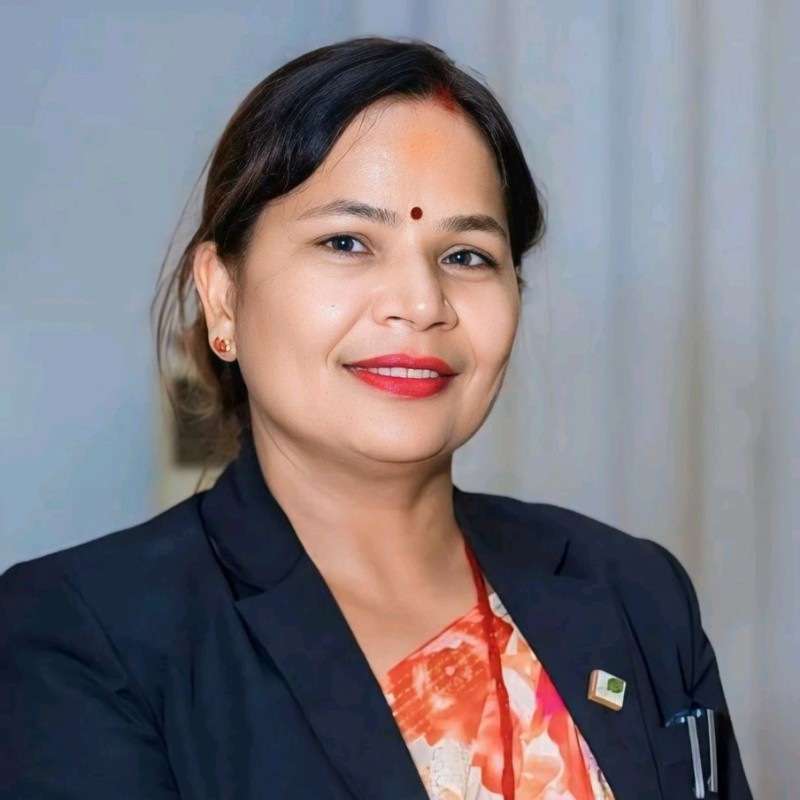
Advocate Gita Acharya
Author · Bar Reg. 9058
Written from more than two decades of legal practice in Pokhara. Updated when the law or process changes.
The short answer
Partition (अंश) under the Muluki Civil Code, 2074 divides ancestral property among those entitled to a share, and daughters have an equal right alongside sons. What you actually receive depends on separating ancestral from self-acquired property, identifying every person entitled to a share, and tracing anything transferred away before the claim — which is why these cases are won on land records rather than on family argument.
What partition actually is
Partition is the division of family property among the members entitled to a share. It is not a punishment, a betrayal or a lawsuit against your parents, though in Pokhara it is often experienced as all three. It is the mechanism by which jointly held family property becomes individually owned.
The Muluki Civil Code, 2074 (2017) governs partition and succession, and one of its most significant reforms was equalising the position of daughters: a daughter has an equal right in ancestral property alongside a son, married or not. A spouse's rights are also recognised in law rather than left to family discretion.
The gap between that legal position and what families actually do is where the litigation lives.
The three questions that decide every partition case
Before anything is filed, an advocate is trying to answer three questions from the documents.
First: what is partible? Ancestral property is divisible among the coparceners. Self-acquired property — earned or bought by an individual, provably, from their own resources — is treated differently. Most disputes hinge on which category a particular plot or house falls into, and the answer comes from the record of how it was acquired, not from what the family says.
Second: who is entitled? Every person with a right to a share must be identified and joined, including those living abroad and those the family would prefer to leave out. A partition that quietly omits an heir is not final — it is a future case.
Third: what has already moved? Property gifted, sold or transferred shortly before a partition claim is a standard tactic, and transfers made to defeat a legitimate claim can be challenged. This is where dates matter enormously.
Documents you need
Partition cases are documentary. Bring everything, even what looks irrelevant.
- Citizenship certificates of all family members involved
- Relationship certificate (नाता प्रमाणित) establishing the family tree
- Death registration where a parent or coparcener has died
- Every land ownership certificate (लालपुर्जा) and tax receipt you can obtain
- Any earlier partition deed (बण्डापत्र), gift deed or will
- Records of transfers: sale deeds, mortgage documents, dates and buyers
- Evidence of contributions — money sent from abroad, construction costs, business investment
Filing, mediation and judgement
For property in Kaski, a partition case is filed at Kaski District Court. In many matters the first step is not filing at all: a properly drafted legal notice setting out the claim and the record it rests on brings a family to the table, and a mediated settlement — registered as a partition deed, with the land records corrected afterwards — closes the matter permanently.
Where negotiation fails, the case proceeds. Interim protection can be sought where there is a real risk that property will be sold while the case runs. Evidence is documentary and testimonial; judgement follows; and where judgement is wrong in law, appeal lies to High Court Pokhara.
The final step is the one people forget: after judgement or settlement, the division must actually be executed — plots divided, records corrected at the Land Revenue Office, ownership certificates issued in the new names. A partition that exists only in a judgement is not yet a partition.
Settle or fight? An honest way to decide
Compare three numbers. What is being offered. What the record supports as your share. And what the case will cost in fees, time and family relationship over the years it may take.
Where the gap between the offer and the record is small, a registered settlement is almost always the better outcome: it is enforceable, it is immediate, and it does not require you to litigate against people you will see at every family event for the rest of your life.
Where the record clearly supports a much larger share — and particularly where property has been transferred away — litigation is worth it, and delay makes it harder. A competent advocate gives you both numbers and lets you choose; be wary of one who only ever recommends filing.
If you are abroad
A large share of partition cases in Kaski involve at least one heir working overseas, and being abroad is not an obstacle. With an authorised power of attorney attested at the Nepali embassy or consulate, an heir in the Gulf, Malaysia, Korea, Japan, Australia, Europe or North America can file, defend, attend through their advocate and receive their share.
It does, however, make one thing urgent: if you are abroad and hear that family land is being sold or transferred, act immediately. Verification at Land Revenue Office Kaski and a freeze application can be done quickly — but only before the transfer is registered.
Partition help in Pokhara
Gitanjali Law Firm files and defends partition and inheritance matters at Kaski District Court, drafts and registers partition deeds and family settlements, and handles नामसारी transfers after a death. Advocate Gita Acharya has practised in Pokhara for over 20 years and handles these matters — including claims by daughters, wives and widows — personally.
Office: Mustang Chowk, Pokhara-7. Call or WhatsApp +977 9856032228 with your land certificates and family documents to hand.
Research note
Official sources
This guide is general information about the law in Nepal, current as at 3 August 2026. It is not legal advice for your matter. Contact Gitanjali Law Firm at +977 9856032228 for advice on your own case.
Questions about this topic
Do daughters get an equal share of property in Nepal?
Yes. Under the Muluki Civil Code, 2074, a daughter has an equal right in ancestral property alongside a son, whether or not she is married. Enforcing it requires establishing the ancestral character of the property and identifying everyone entitled to a share.
Can I claim partition while my parents are alive?
Partition of ancestral property is not dependent on a death, and claims are frequently made during a parent's lifetime. What is claimable depends on which property is ancestral and who the coparceners are — bring the ownership certificates and the family record to establish it.
What if property was sold before I filed my claim?
Transfers made to defeat a legitimate partition claim can be challenged, and the dates are critical. Bring whatever you know about the sale — when, to whom, and for how much — as early as possible, because remedies narrow as the buyer's position consolidates.
How long does a partition case take in Nepal?
A settled partition — negotiated, drafted, registered and given effect in the land records — can be completed comparatively quickly. A contested case involving multiple heirs, disputed ancestral character and property already transferred is measured in months or longer, depending on evidence and the court's calendar.